Showing posts with label conference. Show all posts

NIPS 2016


I have just returned from NIPS (technically, I am still continuing travelling in Canary Islands). Surprisingly, this is my first NIPS. I have enjoyed presentations of great work, as well as communicating with machine-learning folks and friends. Here is an edited high-level write-up I prepared for my co-workers at BlippAR, hence the focus on computer vision and deep learning. The scope of the conference is of course much broader.

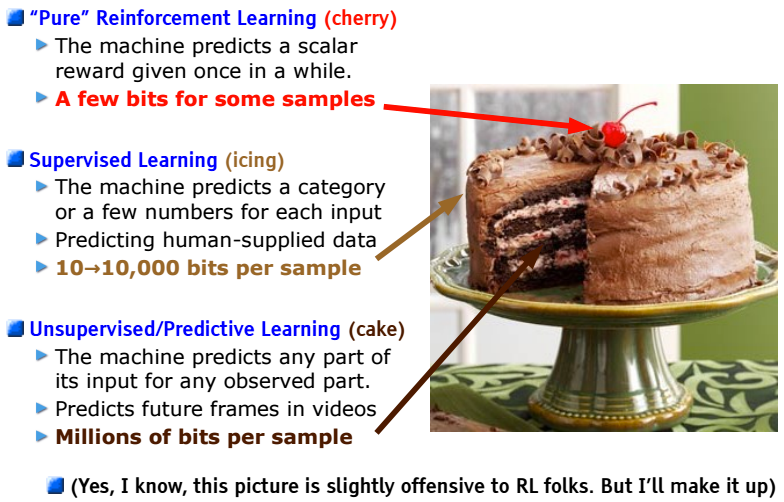
In the beginning of the conference, Yann LeCun gave a keynote, which may be considered a program speech for the whole conference. Besides starting the layered cake meme, he mentioned two ideas that he considers brightest in the last decade: adversarial training and external memory. My perception is that the most frequent buzzwords at the conference are:
  • generative adversarial networks (GAN),
  • recurrent neural networks (RNN),
  • reinforcement learning (RL),
  • robotics (done with or without RL).
Great engineers are good at defining useful abstractions. This LeCun’s layered cake metaphor was heavily re-used throughout the conference.
Andrew Ng gave a keynote on the workflow of applied DL research. Most ideas are trivial, although are often neglected. Here are a few of them. The most important metrics to track are: human error, training set error, and validation error. The gap between human and training set error is the bias. It can be solved by a bigger model or longer training. The validation/training gap is due to the variance. Once the bias problem is addressed, you can add more data or increase regularisation to reduce variance.

In practice, however, we have a different distribution of test data than of the training data. In that case, you might want to have two validation sets: one coming from training distribution, and another from test distribution. If you don’t have the latter, you will be solving a wrong problem. Domain adaptation methods may be also helpful, but are not quite practical at the moment.
He also heavily advocates for using the centralised data storage infrastructure that is easily available to all team members. It speeds up the progress a lot.
Currently, supervised learning dominates the landscape, while unsupervised and reinforcement learning are around for some time, but still cannot take off. Ng predicts that the second-biggest areas (after SL) will be not one of those, but transfer learning and multi-task learning. Those are important practical areas almost ignored by academic researchers.

There were seemingly few papers on architectural design (for supervised learning). Daniel Sedra gave a great talk on Neural networks of stochastic depth. The idea is to drop entire layers during training in ResNet-like architectures. That allows to grow them up to 1000+ layers, which gives significant improvement in accuracy on CIFAR (and not quite significant on ImageNet). Unfortunately, at test-time layers are there, so the inference time may be a problem. Another improvement is to add identity connection between each pair of layers, which also helps a bit.

Michael Figurnov, my academic sibling, presented a work on speeding up inference using so-called perforated convolutions. The idea is to skip some multiplications that do not impact the result of the operation a lot. In the follow-up work, he and co-authors suggest to skip the whole parts of the computation graph once they are estimated to be unimportant. This can potentially lead to significant speed-up, but for most practitioners it is the question of support in libraries such as CUDNN. Hopefully, we’ll be able to use it soon.
The method suggest not to waste computation time on background, but evaluate more ResNet layers where it can pay out more.
There was a demo I missed that demonstrated real-time object detection on a mobile device (if you have a link, please share with me!). It is based on YOLO, and the idea is to pre-compute and memoize some parts of the computational graph, then at inference time find the best approximation. There is some loss in accuracy, but real-time inference on the board looks impressive! 

The most interesting improvement for deep learning optimisation seems to be Weight normalisation. The paper builds on the idea of batch normalisation. It tries to explain the positive effect of it (i.e. staying on the unit sphere) and uses this intuition to propose an alternative way to stabilise the training process.

As I said above, GANs are a big (and controversial) topic here. It seems to be the most popular generative model for images, although variational autoencoders are still around. The training process is quite unstable, but the community is increasingly finding the ways to stabilise it. Most of them are hacks born in trial-and-error process. Soumith Chintala presented a list of 15 tricks in his talk How to train GAN? He promised to publish the slides later, but here is the writeup. If you will have to train GANs, make sure you read that first. There is no way you can guess this combination yourself (and papers typically do not mention all those hacks).
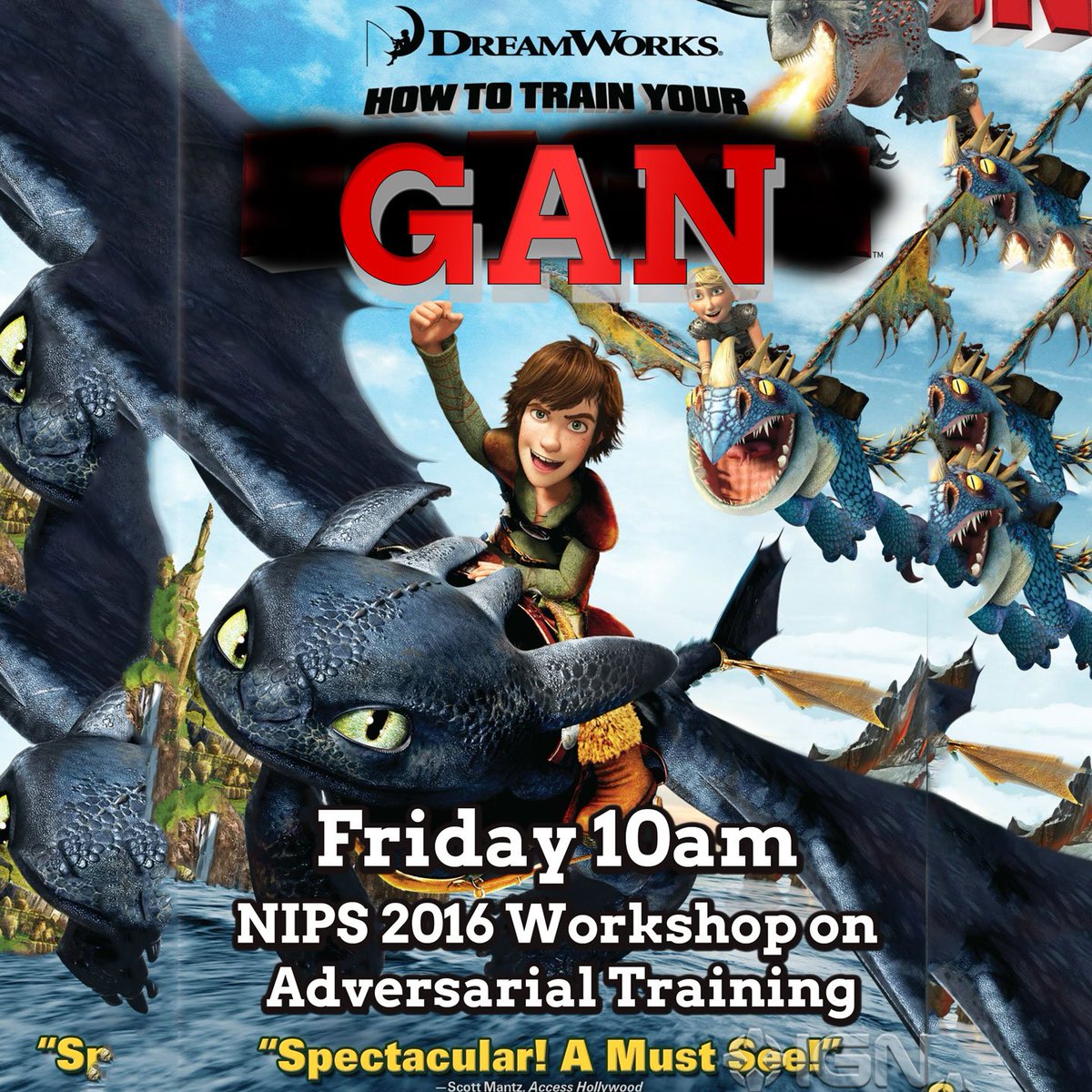
Poster by Soumith. TL;DR: use magic.
In the visual search field, there is a Universal correspondence network paper. Instead of matching features, it suggests to run one pass through the network to find dense correspondences. They claim that in comparison to extracting deep features for patches, the number of distance computations gets down from quadratic to linear (although, spatial index can also mitigate the issue). It appears to learn some notion of geometry/topology, i.e. one can train it to do rigid matching, as well as to look more at semantic similarity. The results they showed were on very similar images, so did not impress me much. Although it may had been done only to ease the visualisation.
Deep learning continues to disrupt traditional computer-vision pipelines.
For reinforcement learning, there is no single paper that I can pick as brightest, but the most impact seems to be done by publishing OpenAI Universe and DeepMind Lab, both are training environments for reinforcement learning algorithms stemming from computer-generated imagery (i.e. video games). It seems to be a valid step towards building intelligent agents operating in the real world, although there is a scepticism that it will be difficult to make the final step: the methods are data-hungry, and it is difficult to get a lot of data from anything rather than simulated environment, let alone having a frequent reward signal. This is one of the reasons researchers study the possibility of imitation learning, where a robot learns the cost function from demonstrations rather than taking it for granted. With this approach, we may be able to teach robots to perform tasks like pouring water into a glass by having a person or another robot showing it how to do it.
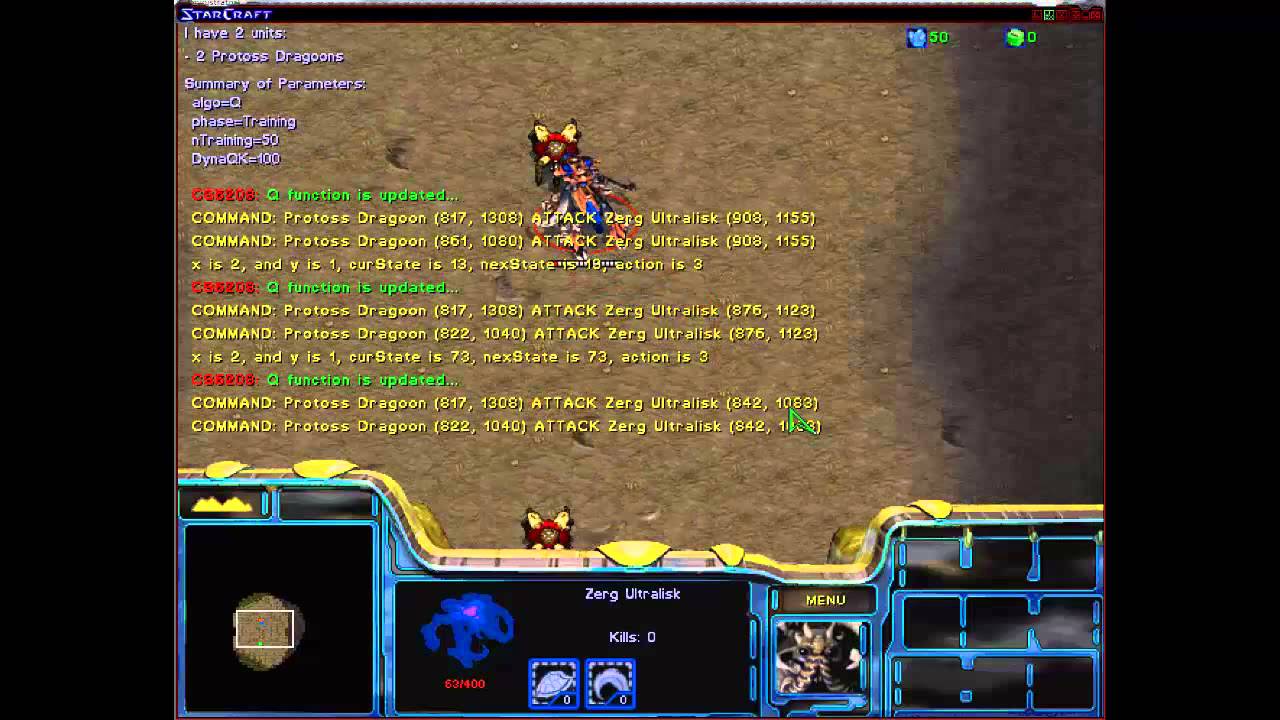
DeepMind collaborated with Blizzard to provide StarCraft API to facilitate training of RL agents. Now you have an excuse to play games at work.
Bayesian methods seem to be quite popular, and apparently can be successfully combined with neural networks (variational autoencoders and their variants are used a lot). Workshops on approximate variational inference and Bayesian deep learning have seen a large number of papers. Tutorial on variational inference (slides-pdf-1, slides-pds-2) reflected a significant progress in the recent years: things like reparametrisation trick and stochastic optimisation made possible to perform estimation of quite sophisticated posterior distributions. 
Slide by David Blei. Bayesian models have been long used successfully to estimate uncertainty, in particular to glue models to get complex pipelines while avoiding information loss. It is great we can use it with modern models as well.
Surely, an important part of the conference is socialisation. So thanks to everybody I had a chance to meet at the conference and had a productive (or just fun) conversation with. See you at the future conferences!

Read Users' Comments (9)

[CFP] GraphiCon-2011 and MSCVSS

Our lab traditionally organizes GraphiCon, the major (and may be the only) conference in Russia specialized in computer graphics and computer vision. The conference is not very selective, still it has a decent community of professionals behind it. So, if you want to get a quality feedback on your preliminary work, or always wanted to visit Russia, consider submitting a paper by May, 16.

Special offer for young readers of my blog: If it is the place where you learned about the conference and decided to submit a paper, I'll buy you a beer during the conference. :) Consider it another social micro-event.

Another piece of news is primarily for undergrads and PhD students from Russia. Our lab and Microsoft Research organize another event this summer: Computer vision summer school. There are such lecturers as Cristoph Lampert and Andrew Zisserman, among others. Participation is free of charge, and accommodation is provided. Deadline is on April, 30. You should not miss it!

Read Users' Comments (2)

IEEE goes evil?

In November, the IEEE released a new copyright agreement, that is to be signed by the authors of all papers published by the organization since January 2011. The main novelty is that the authors are not allowed to publish final versions of their papers on-line. Fortunately, we still may post the versions accepted for print (with post-review corrections), which is still great, indeed. You can find the FAQ concerning the new policy here.

It seems the IEEE realizes that nowadays there is almost no need in their printed materials and the digital library as search engines manage to find papers posted by their authors. No doubt that they do not want to restrict dissemination of scientific results, but that is a question of their survival as a major publishing organization. The worst is they use the drug-dealer strategy: first they organize great conferences and journals (the majority of top venues in my field are run by IEEE), and allow authors to re-publish anything on-line ("the first hit for free"), then cut it off. Yes, one still may post an accepted version, but who knows what is their next step?

The IEEE motivate their decision by preserving the value of their database: "the IEEE is better able to track usage of articles for the benefit of authors and journals". One can object that there are big and growing open-access databases like Mendeley, where all the statistics is open and refined (the personal info of users is known). Also, not all institutions have an access to the library. For example, my university (the largest one in Russia) does not. And I cannot afford to pay $25 per paper.

What can we do about that? Sure, it is impossible to stop publish in IEEE venues, although the community can find the way around, as was demonstrated by the founders of JMLR, now the major journal in machine learning, which was created to cancel the overhead of the commercial publishing model. Matt Blaze encourages the researchers not to serve as reviewers for IEEE. As for me, I'm too young (as a researcher) to be a reviewer. But it also has effect on me: I am now preparing a final version for the proceedings published by the IEEE, and I doubt if there is any use in improving my paper (even given a quality review), assuming that majority of researchers will use the accepted version and will never see the revised one.

UPD (Mart 14, 2011). I should have misunderstood the new policy at first, Blaze's post and IEEE terminology somehow misled me. The accepted paper means accepted for print by the IEEE, not the submitted for review. So, you still can use review results to correct the paper and post it on-line, then submit for publishing, where the formatting will probably be adjusted. So, any meaningful part could be reflected in the on-line version. I have corrected the post now, so it may seem weird.

Read Users' Comments (3)

Nice paper acknowledgement

It turns out that not only in Russia PhD students could be underpaid so that they cannot afford food:

This is from Olga Veksler's paper "Graph cut based optimization for MRFs with truncated convex priors" from CVPR 2007. 

Andrew seems to be a nice person. I should definitely ask Anton Osokin to introduce us on ocasion. =)

Read Users' Comments (3)

ECCV 2010 highlights

Today is the last day of ECCV 2010, so the best papers are already announced. Although I was not there, a lot of papers are available via cvpapers, so I eventually run into some of them.

Best papers

The full list of the conference awards is available here. The best paper is therefore "Graph Cut based Inference with Co-occurrence Statistics" by Lubor Ladicky, Chris Russell, Pushmeet Kohli, and Philip Torr. The second best is "Blocks World Revisited: Image Understanding Using Qualitative Geometry and Mechanics" by Abhinav Gupta, Alyosha Efros, and Martial Hebert. Two thoughts before starting reviewing them. First, the papers come from the two institutions which are (arguably) considered now the leading ones in the vision community: Microsoft Research and Carnegie-Mellon Robotics Institute. Second, both papers are about semantic segmentation (although the latter couples it with implicit geometry reconstruction); Vidit Jain already noted the acceptance bias in favour of the recognition papers.

Okay, the papers now. Ladicky et al. addressed the problem of global terms in the energy minimization for semantic segmentation. Specifically, their global term deals only with occurrences of object classes and invariant to how many connected components (i.e. objects) or individual pixels represent the class. Therefore, one cow on an image gives the same contribution to the global term as two cows, as well as one accidental pixel of a cow. The global term penalizes big quantity of different categories in the single image (the MDL prior), which is helpful when we are given a large set of possible class labels, and also penalizes the co-occurrence of the classes that are unlikely to come along with each other, like cows and sheep. Statistics is collected from the train set and defines if the co-occurrence of the certain pair of classes should be encouraged or penalized. Although the idea of incorporating co-occurrence to the energy function is not new [Torralba et al, 2003; Rabinovich et al., 2007], the authors claim that their method is the first one which simultaneously satisfy the four conditions: global energy minimization (implicit global term rather than a multi-stage heuristic process), invariance to the structure of classes (see above), efficiency (not to make the model order of magnitude larger) and parsimony (MDL prior, see above).

How do the authors minimize the energy? They restrict the global term to the function of the set of classes represented in the image, which is monotonic w.r.t. argument set enclosing (more classes, more penalty). Then the authors introduce some fake nodes for αβ-swap or α-expansion procedure, so that the optimized energy remains submodular. It is really similar to how they applied graph-cut based techniques for minimizing energy with higher-order cliques [Kohli, Ladicky and Torr, 2009]. So when you face some non-local terms in the energy, you can try something similar.

What are the shortcomings of the method? It would be great to penalize objects in addition to classes. First, local interactions are taken into account, as well as global ones. But what about the medium level? Shape of an object, size, colour consistency etc. are the great cues. Second, on the global level only inter-class co-occurrences play a role, but what about the intra-class ones? It is impossible to have two suns in a photo, but it is likely to meet several pedestrians walking along the street. It is actually done by Desai et al. [2009] for object detection.

The second paper is by Gupta et al., who have remembered the romantic period of computer vision, when the scenes composed of perfect geometrical shapes were reconstructed successfully. They address the problem of 3D reconstruction by a single image, like in auto pop-up [Hoiem, Efros and Hebert, 2005]. They compare the result of auto pop-up with Potemkin villages: "there is nothing behind the pretty façade." (I believe this comparison is the contribution of the second author). Instead of surfaces, they fit boxes into the image, which allows them to put a wider range of constraints to the 3D structure, including:
  • static equilibrium: it seems that the only property they check here is that centroid is projected into the figure bearing;
  • enough support force: they estimate density (light -- vegetation, medium -- human, heavy -- buildings) and say that it is unlikely that building is build on the tree;
  • volume constraint: boxes cannot intersect;
  • depth ordering: backprojecting the result to the image plane should correspond to what we see on the image.
This is a great paper that exploits Newtonian mechanics as well as human intuition, however, there are still some heuristics (like the density of a human) which could probably be generalized out. It seems that this approach has a big potential, so it might became the seminal paper for the new direction. Composing recognition with geometry reconstruction is quite trendy now, and this method is ideologically simple but effective. There are a lot of examples how the algorithm works on the project page.

Funny papers

There are a couple of ECCV papers which have fancy titles. The first one is "Being John Malkovich" by Ira Kemelmacher-Shlizerman, Aditya Sankar, Eli Shechtman, and Steve Seitz from the University of Washington GRAIL. If you've seen the movie, you can guess what is the article about. Given the video of someone pulling faces, the algorithm transforms it to the video of John Malkovich making similar faces. "Ever wanted to be someone else? Now you can." In contrast to the movie, in the paper not necessarily John Malkovich plays himself: it could be George Bush, Cameron Diaz, John Clooney and even any person for whom you can find a sufficient video or photo database! You can see the video of the real-time puppetry on the project page, although obvious lags take place and the result is still far from being perfect.

Another fancy title is "Building Rome on a Cloudless Day". There are 11 (eleven) authors contributing to the paper, including Marc Pollefeys. This summer I spent one cloudless day in Rome, and, to be honest, it was not that pleasant. So, why is the paper called this way then? The paper refers to another one: "Building Rome in a Day" from ICCV 2009 by the guys from Washington again, which itself refers to the proverb "Rome was not built in a day." In this paper authors build a dense 3D model of some Rome sights using a set of Flickr photos tagged "Rome" or "Roma". Returning back to the monument of collective intelligence from ECCV2010, they did the same, but without cloud computing, that's why the day is cloudless now. S.P.Q.R.

I cannot avoid to mention here the following papers, although they are not from ECCV. Probably the most popular CVPR 2010 paper is "Food Recognition Using Statistics of Pairwise Local Features" by Shulin Yang, Mei Chen, Dean Pomerleau, Rahul Sukthankar. The first page of the paper contains the motivation picture with a hamburger, and it looks pretty funny. They insist that the stuff from McDonald's is very different from that from Burger King, and it is really important to recognize them to keep track of the calories. Well, the authors don't look overweight, so the method should work.

The last paper in this section is "Paper Gestalt" by the imaginary Carven von Bearnensquash, published in Secret Proceedings of Computer Vision and Pattern Recognition (CVPR), 2010. The authors (presumably from UCSD) make fun of the way we usually write computer vision papers assuming that some features might convince a reviewer to accept or reject the paper, like mathematical formulas that create an illusion of author qualification (although if they are irrelevant), ROC curves etc. It also derides the attempts to apply black-box machine-learning techniques without the appropriate analysis of the possible features. Now I am trying to subscribe to the Journal of Machine Learning Gossip.

Colleagues

There was only one paper from our lab at the conference: "Geometric Image Parsing in Man-Made Environments" by Olga Barinova and Elena Tretiak (in co-authorship with Victor Lempitsky and Pushmeet Kohli). The scheme similar to the image parsing framework [Tu et al., 2005] is utilized, i.e. top-down analysis is performed. They detect parallel lines (like edges of buildings and windows), their vanishing points and the zenith jointly, using a witty graphical model. The approach is claimed to be robust to the clutter in the edge map.

Indeed, this paper could not have been possible without me. =) It was me who convinced Lena to join the lab two years ago (actually, it was more like convincing her not to apply for the other lab). So, the lab will remember me at least as a decent selectioner/scout...

Read Users' Comments (1)comments

Olga's CVPR paper

I'd like to congratulate my colleague Olga Barinova on the paper, which is accepted to CVPR international conference! To my knowledge, it is the first paper from our lab, which is accepted to a Rank 1 conference (though it was written during Olga's internship at Microsoft Research).

The paper is on multiple object retrieval. They extend the Hough transform with some graphical model, which makes the results more robust. As soon as the paper become publicly available, I'll add the link here.


UPD. (Apr 20, 2010) PDF

UPD (Jul 30, 2010) Video

Read Users' Comments (1)comments